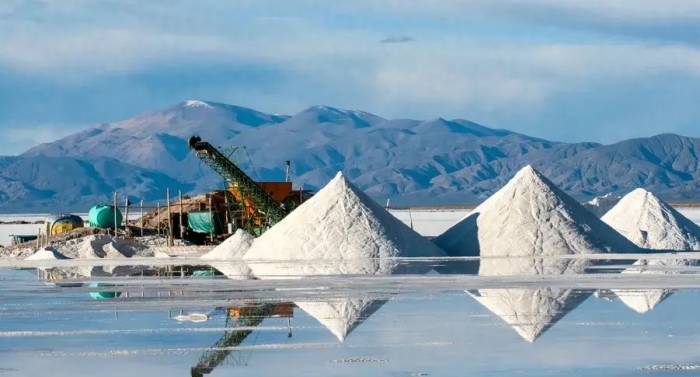
Let's cut to the chase. Argentina is not just a potential player in the global lithium game; it's already a major producer, sitting on the second-largest lithium resources in the world within its slice of the "Lithium Triangle." If you're asking who's mining lithium in Argentina, you're looking at a mix of established giants, ambitious juniors, and state-backed entities, all racing to extract the "white gold" from the high-altitude salt flats of the Puna region.
The short list includes names like Livent, Allkem (now part of Arcadium Lithium), Ganfeng Lithium, and Eramet, with major investments from Posco and Rio Tinto coming online. But knowing the names is just the start. The real story is in the specific projects, the staggering investments (billions of dollars), the complex dance with provincial governments, and the logistical headaches of operating at 4,000 meters above sea level.
Having followed this sector for years, I've noticed that most articles just list companies. They miss the nuances—like why one company's brine chemistry gives it a cost edge, or how provincial regulations in Jujuy differ catastrophically from those in Catamarca for an unwary investor. We'll get into that.
What You'll Find in This Guide
Who Are the Major Lithium Mining Companies in Argentina?
Think of the landscape in three tiers. The established producers are already pumping brine and making battery-grade carbonate. Then you have the advanced developers with projects under construction or in final feasibility. Finally, a swarm of exploration juniors are hunting for the next big discovery. We'll focus on the first two tiers, the ones actually moving the needle on production.
Here’s a snapshot of the key actors on the ground right now.
| Company (Primary Origin) | Key Argentine Project(s) | Current Status | Estimated Lithium Carbonate Equivalent (LCE) Capacity (Current/Target) |
|---|---|---|---|
| Livent (USA) - Now part of Arcadium Lithium | Salar del Hombre Muerto (Catamarca) | In production since 1997. Actively expanding. | ~20,000 tonnes/year. Expansion to 60,000+ tonnes/year planned. |
| Allkem (Australia/Argentina) - Now part of Arcadium Lithium | Salar de Olaroz (Jujuy) | In production (Stage 1). Stage 2 under construction. | 17,500 tonnes/year (Stage 1). Stage 2 will add 25,000 tonnes/year. |
| Ganfeng Lithium (China) | Cauchari-Olaroz (Jujuy), Mariana (Salta) | Cauchari-Olaroz in production. Mariana under construction. | Cauchari-Olaroz: 40,000 tonnes/year. Mariana: 20,000 tonnes/year planned. |
| Eramet (France) with Tsingshan (China) | Centenario-Ratones (Salta) | Construction phase started in 2022. First production expected 2025. | Phase 1 target: 24,000 tonnes/year. |
| Posco (South Korea) | Sal de Oro (Salar del Hombre Muerto) | Pilot production. Commercial-scale construction underway. | Target: 25,000 tonnes/year by 2025. |
| Rio Tinto (UK/Australia) | Rincon (Salta) | Pilot plant operational. Final investment decision pending. | Pilot scale. Potential for 50,000+ tonnes/year. |
| Minera Exar (J/V: Ganfeng, Lithium Americas) | Cauchari-Olaroz (see above) | See Ganfeng entry. | See Ganfeng entry. |
A crucial point most miss: the merger between Livent and Allkem in early 2024 to form Arcadium Lithium. This created a behemoth with two producing assets in Argentina (Hombre Muerto and Olaroz). It's not just a new name; it consolidates expertise and capital, making this entity the single most important lithium miner in the country.
Deep Dive: Key Lithium Projects & Their Status
Projects are the heartbeat of this industry. Their location, technology, and partnerships tell the real story.
Salar del Hombre Muerto (Catamarca/Salta)
This is the veteran. Livent has been here for decades, and its operations are a case study in gradual, tech-focused expansion. They use a unique direct lithium extraction (DLE) process they developed in-house. The efficiency is high, but scaling it has been methodical, not explosive. Right next door, Posco acquired its Sal de Oro project and is building a massive operation using its own DLE technology. Watching two different proprietary DLE technologies operate side-by-side in the same salt flat is an industry experiment everyone's watching.
Salar de Olaroz / Cauchari-Olaroz Basin (Jujuy)
This basin is the epicenter of the current boom. Allkem's Olaroz operation uses conventional solar evaporation but is known for its high-quality, low-cost production. Their expansion is straightforward: more ponds. Just south, the Cauchari-Olaroz project (operated by Ganfeng through Minera Exar) is one of the largest new brine operations globally. It came online in 2023 and is the primary reason Argentina's output is surging. The scale here is mind-boggling—thousands of hectares of evaporation ponds on the high plateau.
Centenario-Ratones (Salta)
This is the Eramet story. They paused for years after the 2018 crisis, then partnered with Chinese stainless-steel giant Tsingshan to fund it. Their game-changer is a DLE technology they claim drastically reduces water use and evaporation time. If it works at commercial scale as promised (first production slated for 2025), it could set a new environmental and efficiency benchmark for the region.
Lithium Mining Challenges in Argentina: Beyond the Hype
This is where glossier reports stop. Mining lithium in Argentina isn't just about digging up brine. It's a constant negotiation with physics, politics, and local communities.
The Regulatory Maze
The regulatory framework is, frankly, a headache. Mineral resources are constitutionally owned by the provinces, not the federal government. This means you negotiate with Jujuy, Salta, or Catamarca, each with its own rules, royalty rates, and environmental standards. The federal government sets macro-economic policy (like export taxes), creating a layer of conflicting incentives. A company might have a great deal with Catamarca, only to be tripped up by a new federal capital control rule. Investors often underestimate this bifurcated power structure.
The Infrastructure Gap
You're building a chemical plant in the middle of a desert, 4,000 meters up. The lack of roads, power, and water (for industrial use, not brine) is a monumental challenge. Companies spend hundreds of millions just on infrastructure before they extract a kilo of lithium. Port access is another bottleneck. Most product is trucked to Chile's Antofagasta port or northern Argentine ports, adding cost and complexity. This isn't a minor detail; it's a major factor in a project's final cost and viability.
Community Relations & Environmental Scrutiny
The term "social license to operate" is paramount. Indigenous communities near the salt flats have legitimate concerns about water usage. The narrative that lithium mining is "water-intensive" is oversimplified—brine extraction is different from freshwater mining—but the perception and potential for aquifer impact are real. Successful companies aren't those that just get a permit; they're the ones that engage in long-term, transparent agreements with local communities. Projects have been delayed or redesigned due to community consultations. Ignoring this is a recipe for failure.
Investment Outlook: Is Argentina's Lithium Sector Still a Good Bet?
With all these challenges, why is everyone still piling in? The fundamentals.
Argentina's lithium production is projected by the U.S. Geological Survey to grow exponentially this decade, potentially challenging Chile for the #2 global spot. The pipeline of projects under construction is massive. For investors, the play is different now than five years ago.
The easy money in early exploration is gone. The opportunity now lies in:
- Producers with expansion potential (like Arcadium Lithium).
- Developers with proven technology and funded construction (like Eramet's Centenario).
- Companies with strategic partnerships that de-risk funding and off-take.
The risk is real—political volatility, inflation, and permitting delays can crater a junior stock. But the sheer scale of the resource and the global demand from automakers (Tesla, BYD, Ford, etc., all need secure supply) creates a floor of interest. My take? It's a sector for informed, patient capital, not speculators looking for a quick win.
Your Lithium Mining in Argentina Questions Answered
So, who is mining lithium in Argentina? It's a dynamic, high-stakes group of global players betting on a resource that's critical for the energy transition. They're not just mining a metal; they're navigating one of the most logistically and politically complex mining jurisdictions on earth. For the world watching the EV revolution, understanding these players and their challenges is key to understanding the future of the lithium supply chain.