Let's be blunt. The lithium market isn't for the faint of heart. If you're looking at it today, you're likely staring at charts that show prices down 80% from their 2022 peaks. It feels like a disaster. But that's exactly why a clear-headed lithium market review is crucial—not to echo the panic, but to separate the cyclical noise from the structural story. The long-term demand trajectory from electric vehicles (EVs) and energy storage hasn't vanished. It's the messy, painful process of supply catching up and then overshooting that's causing the whiplash. This review cuts through the headlines to look at price drivers, supply chain bottlenecks you might not have considered, and what this volatility really means for anyone from a procurement manager to an individual investor.
What You'll Find in This Review
What's Really Driving Lithium Prices Up and Down?
Everyone points to EV sales. That's the big picture, but it's too simplistic. The lithium price crash of 2023-2024 wasn't just about demand softening in Europe or subsidy changes. It was a perfect storm of three things most casual observers miss.
First, the inventory cycle. During the 2021-2022 shortage panic, everyone—from cathode makers to auto OEMs—double-ordered. They built up buffer stocks. When sentiment shifted, they stopped buying to draw down inventory. This destocking phase can suppress demand for months, regardless of actual EV production. It creates a false signal of oversupply.
Second, the shift in battery chemistry. This is a subtle but massive driver. Lithium comes in different forms, mainly lithium carbonate and lithium hydroxide. For years, the high-nickel batteries favored by Tesla and others pushing for longer range demanded premium hydroxide. Now, the rapid rise of Lithium Iron Phosphate (LFP) batteries, which use carbonate, is changing the game. LFP's market share is soaring because it's cheaper and safer. This has cratered hydroxide premiums and reshaped which mining projects are economically viable. A project designed for hydroxide might struggle in today's market.
Third, policy lags and regional mismatches. The US Inflation Reduction Act (IRA) and Europe's Critical Raw Materials Act are designed to build local supply chains. But these things take years. In the meantime, new supply is still coming online in traditional hubs like Australia and South America. There's a timing mismatch. We have a global surplus of raw spodumene concentrate from Australia, but a deficit of refining capacity in North America and Europe to turn it into battery-grade material. The price reflects the bottleneck of the moment.
Key Price Indicators to Watch (Beyond the Headline Number)
If you want to gauge the market's health, look at these signals:
- Spodumene Concentrate (6%) Prices: This is the raw ore. When its price falls close to or below the production cost for high-cost miners (around $800-$1,000 per tonne), it's a signal that supply discipline—mine closures or slowdowns—is imminent. That's a potential bottoming signal.
- Chinese Lithium Carbonate Inventory Levels: Regular reports from Asian metal exchanges like the Shanghai Metal Market give a peek into inventory at major hubs. Rising inventories usually precede price drops.
- EV Sales Mix Data: Not just total sales, but the percentage of EVs using LFP vs. NMC batteries. A rising LFP share puts more pressure on carbonate and changes the demand profile.
The Hidden Knots in the Lithium Supply Chain
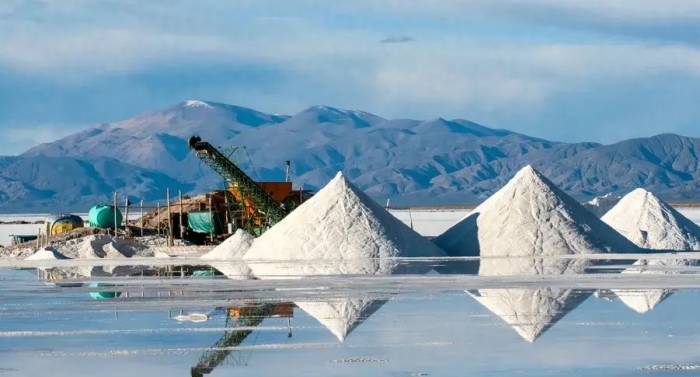
Geopolitics gets all the press. Yes, over 60% of lithium processing is concentrated in China. Yes, the "Lithium Triangle" of Chile, Argentina, and Bolivia holds the world's largest reserves. But the operational headaches are more granular.
Take permitting. In North America, it can take 7 to 10 years to get a mine from discovery to production. In Chile, the national lithium strategy has introduced new state partnership models that, while aiming for sustainability, have created uncertainty and slowed investment decisions. Compare that to Western Australia, where the process is more streamlined, but you face high labor and energy costs. Every jurisdiction has its own tax regime, royalty structure, and environmental hurdles. A project's location isn't just about geology; it's a bet on political stability and regulatory efficiency.
Then there's the technical hurdle of grade and impurity. Not all lithium deposits are created equal. Brine operations in South America are cheap to run but can have high magnesium content, which complicates processing. Hard rock mines in Australia have higher grades but are more capital-intensive. New direct lithium extraction (DLE) technologies promise faster, greener production from brines, but they're largely unproven at commercial scale. Scaling any new technology is a graveyard of failed promises and cost overruns.
| Supply Region | Primary Type | Key Advantage | Major Challenge | Example Projects |
|---|---|---|---|---|
| Chile (Atacama) | Brine | Lowest operating cost globally | Water usage concerns, state participation models | SQM, Albemarle operations |
| Western Australia | Hard Rock (Spodumene) | High grade, fast to scale | High CAPEX, volatile energy costs | Greenbushes, Mt Marion, Pilgangoora |
| Argentina (Salar) | Brine | Favorable provincial policies, new projects | Infrastructure deficit, inflation | Cauchari-Olaroz, Sal de Vida |
| North America | Mixed (Clay, Brine, Hard Rock) | IRA incentives, security of supply | Extremely long permitting timelines | Thacker Pass (Clay), James Bay (Hard Rock) |
The real bottleneck everyone is scrambling to fix isn't mining—it's mid-stream conversion. Building a chemical plant to convert spodumene concentrate or brine into battery-grade lithium is complex, expensive, and chemically intensive. The expertise is scarce. Most new projects outside China are being developed by mining companies who have to learn this chemical engineering business on the fly, often through partnerships. Delays and cost blowouts here are almost the norm, not the exception.
A Realistic Guide to Lithium Market Investing
So, prices are low. Is it time to buy? Maybe. But throwing money at any lithium stock is a great way to lose it. You need a framework.
First, decide what kind of exposure you want. It's a spectrum of risk and leverage to the lithium price.
- Major Producers (Albemarle, SQM, Livent/Arcadium): Lower risk, diversified, with long-term customer contracts that smooth out volatility. But you get less upside in a price spike. They're like the blue-chips.
- Developers with Near-Term Projects: Higher risk, higher potential reward. These are companies with a defined resource, feasibility studies, and aiming for production in the next 2-4 years. Their value is extremely sensitive to lithium prices and their ability to secure funding. In a downturn, these stocks get crushed. In an upturn, they can multiply.
- Exploration Companies (Juniors): The lottery tickets. Pure speculation on drilling results. Only for capital you are prepared to lose entirely.
- ETFs (e.g., LIT, Global X Lithium & Battery Tech ETF): Provides diversified exposure across the chain—miners, processors, battery makers. Removes single-company risk but also dilutes the pure lithium play.
My personal rule, after watching cycles for years, is to focus on cost position. In a commodity market, the low-cost producer always survives. When you look at a company, don't just get hypnotized by the size of their resource. Look at their projected all-in sustaining cost (AISC). Is it in the bottom half of the global cost curve? Projects with costs above $12,000 per tonne of lithium carbonate equivalent (LCE) are vulnerable in any prolonged downturn. The ones below $8,000 are much more resilient.
The other critical factor is off-take agreements. Has the company pre-sold a portion of its future production to a credible partner like an automaker or battery giant? A binding off-take agreement is more than a sales contract; it's a vote of confidence that often comes with financing support. It de-risks the project massively. A developer with no off-takes in this market is facing a very steep climb.
Your Lithium Market Questions Answered
The lithium market review isn't about finding a simple answer. It's about understanding a complex system in flux. Prices will recover—demand from the energy transition sees to that. But the path will be jagged, marked by supply delays, technological shifts, and policy changes. Success, whether you're investing or procuring, won't come from betting on a single price point. It will come from understanding the underlying drivers, focusing on structural advantages like low costs and secure partnerships, and maintaining the flexibility to adapt when the market inevitably throws its next curveball. Ignore the day-to-day noise. Watch the cost curve, watch the inventory cycles, and above all, respect the sheer difficulty of turning rocks and brine into the consistent, high-purity material that fuels the future.