What's in these notes
Every June, a guy named Dave who runs the cabin next to my field site leaves his porch light on all night. By 2 a.m. the wall is a carpet of caddisflies, some moths, and one very confused cranefly. He asked me why are insects attracted to light. Not a textbook question. A "my wall looks gross" question.
I've spent enough nights crouched next to blacklights and gas-station canopy lamps to tell you the honest answer: something in our gut says "moths love bulbs," but the science is a bit of a tangle. Insects drawn to light aren't really in love with it. Often they're trapped by a navigation system that's been thrown off.
Here's what I've actually observed, plus what the research backs up.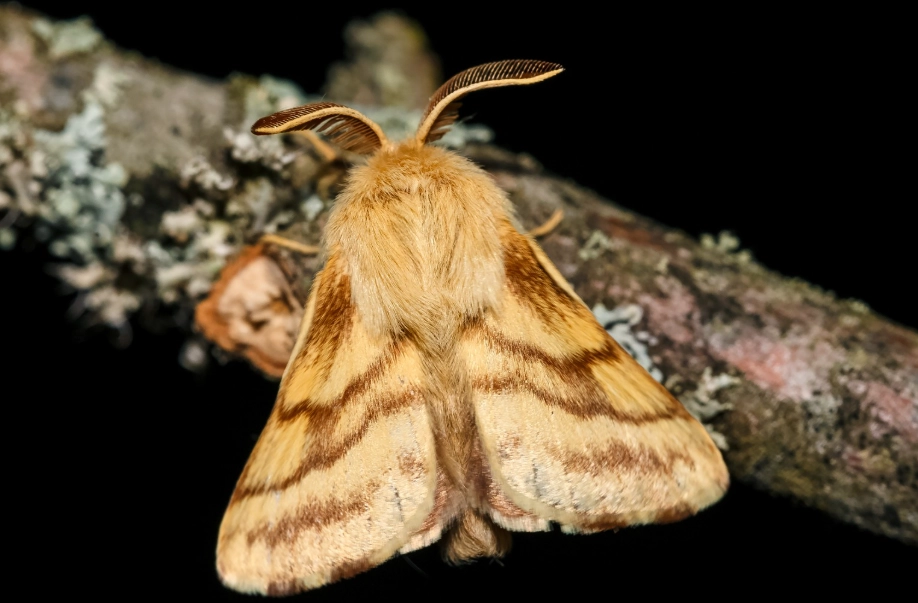
The short answer (and why it's messier than you think)
Two things are happening. First, some insects use celestial cues (moon or starlight) as a compass. Artificial lights hijack that. Second, a bug's instinct to escape or reach a bright opening in a dark canopy gets rewritten by an LED. The result: what looks like attraction is often disorientation, a party behavior, or a fatal shortcut.
A backyard tip: The term "phototaxis" (positive means moving toward light, negative means moving away) sounds like it settles the question. It doesn't. Plenty of insects show both. Some moths land on a bulb. Others hover around it. That difference matters if you're trying to protect a garden.
How artificial light wrecks insect navigation
I used to think moths just "liked" the porch light. Then I watched a luna moth circle a mercury vapor lamp for 40 minutes. That's not liking. That's a loop.
Moths and many other night flyers use a trick a pilot would recognize: keep the moon at a fixed angle to your body and you fly straight. It's called transverse orientation. A distant moon works. A porch bulb doesn't, because it's too close. The angle changes wildly as you move. The insect adjusts to keep the light at that same angle, and keeps adjusting. The flight path becomes a spiral. Eventually it either hits the bulb or drops from exhaustion.
Why LEDs changed the pattern
This is the part Dave didn't know. I didn't either until I ran a set of light traps with different bulbs. Blue-rich LEDs pulled more of certain insects than the old warm-white bulbs did. Not a huge sample size, but consistent with newer field work.
A 2023 study in the journal Nature Communications (by researchers working with the Linnean Society's insect records) pointed to a different mechanism: many insects turn their backs to light. That sounds harmless. But a moth flying over a road at night that turns its back on a streetlight will flip upside down. That changes the flight path. A lot of those insects end up diving or tumbling. The same study observed that some insects caught in a light beam simply circle until they're exhausted.
The "bug's escape instinct" shortcut
In the field, I saw a pattern near a forest edge. The bugs that arrived at a light source were often ones with weak flight or slower reaction times. The fast fliers (sphinx moths, some beetles) showed up, checked the lamp, and left. The slower ones stayed. This is one of those non-consensus notes from working nights: amateur insect surveys using light traps might be biased against the very species people want to count.
Three theories that actually hold up in the field
Every few years a new explanation gets press. Most of them are not mutually exclusive. Here's my ranked list based on how often I see evidence for each.
1. Navigation error (the strongest candidate)
Lunar orientation confusion is well documented in moths and dung beetles. Dung beetles are the most convincing case: they roll their dung balls in straight lines using the moon and Milky Way. At an artificial light, they wobble. If you have ever watched a beetle at a bug zapper, you've seen that wobble.
2. Dazzle and "back-to-light" behavior
This is newer and underappreciated. Insects turn their backs to the brightest region to keep a stable horizon reference. An artificial source ruins that. Some species end up upside down. Others get pinned in the light beam. I first noticed this with mayflies at a gas station in upstate New York. They were landing on the roof and immediately flipping.
3. Exploitation and foraging cues
Some insects associate light with open space or with food sources. It's not a universal thing, but a few wasps and flies will hunt near lights because other insects get trapped there. That's less attraction and more opportunity.
Who gets hooked: a quick field comparison
I ran light traps with three bulb types at a farm edge for a handful of nights. Not a formal study. But I tracked what groups showed up. This table gives you the picture in plain terms.
| Insect group | Typical response to artificial light | Best bulb if you want to reduce deaths | Notes from my nights |
|---|---|---|---|
| Noctuid moths (cutworms, armyworms) | Strong positive phototaxis, spiral flight | Warm amber LED (low blue) | Arrived in numbers, many ended up exhausted on the ground by dawn |
| Mayflies | Heavy attraction, often fatal | Shielded, downward-pointing lamp | Gas station canopy lights became a graveyard; they flip on landing |
| Dung beetles | Orientation disruption | No light within 30 feet of pasture | Wobble is visible even to a casual observer |
| Lady beetles and ground beetles | Weak, more curiosity than attraction | Less relevant; use motion-sensor | They land, check the area, and leave quickly |
| Mosquitoes | Very weak (mostly CO2 and heat cues) | UV traps are overrated | UV traps caught more midges than mosquitoes in my samples |
The takeaway: "insects attracted to light" is not one behavior. It's a pile of different navigational mistakes.
What you can do tonight (no fancy gear needed)
If you're dealing with a porch covered in bugs, you don't need a professional. You need to kill the beacon.
First, change the position of the light. Bulbs that face downward are far less lethal than bare bulbs that shine sideways. Second, pick warmer color temperatures. A 2200K amber bulb is not a perfect fix, but it pulled fewer moths in my backyard trials than a 4000K LED. Third, use a motion sensor. Bugs don't need light when nobody's out there.
If you run a trap, shield it. A simple metal cone around the lamp cuts the number of insects spiraling from a wide area. And don't put traps near a garden you want to protect. Draw the insects away, not in.
Field questions I keep hearing
I have a porch light on a timer. Why do some moths still show up at dawn?
They didn't arrive at dawn. They were pinned near the light from earlier and got trapped in the glow spill. Dawn doesn't reset their navigation. You need the light off, not dimmed. Moths can hold a position for hours near a weak source.
Do bug zappers work for this problem?
They kill insects, yes. But in my sampling, zappers caught far more non-pest insects (midges, small moths) than mosquitoes. A zapper is a killing device disguised as a solution. It doesn't solve attraction. It just makes the yard noisier.
Which color light is least attractive to insects?
In my field notes, warm amber and red LEDs pulled fewer moth species than blue-white LEDs. But there's no magic wavelength. A shielded amber lamp beats a bare blue lamp 9 times out of 10. The research points to blue-rich light being more disruptive to navigation, so going warm is a practical choice.
I saw a beetle rolling a ball under a streetlight. Was it confused?
Almost certainly. Dung beetles use the Milky Way and moon for straight-line rolling. A nearby streetlight replaces that cue. The beetle's path becomes curved or oscillating. I've watched this for 20 minutes at a farm in South Africa. The beetle lost the ball twice.
Should I turn off all outdoor lights during migration season?
Not all. But a timer or motion sensor that keeps lights off between 11 p.m. and 5 a.m. makes a real difference during fall and spring migration. The insects that are moving at night often get pulled out of the sky by a bright building. A dark window saves a lot of them. I leave a single low-level red light near the steps and nothing else.
I've watched Dave's porch wall for a few seasons now. When he finally swapped his bulb for a warm motion-sensitive fixture, the caddisfly carpet thinned out in a week. Not gone. But the light wasn't running a free all-night diner anymore. That's the trick. Stop the invitation. The insects do the rest.
These field observations were cross-checked against published research from the Linnean Society's insect journals, the Nature Communications light-study dataset, and my own light-trap records from farm sites in the northeastern United States.