What's in this quick read
If you've ever seen one dash across your bathroom floor at 2 a.m. and thought, "What is that thing?" you're not alone. I've had readers ask me are centipedes insects more times than I can count. Quick answer: no, they're not. Centipedes belong to a completely different group called Chilopoda, which is a class within the phylum Arthropoda — same big family as insects and spiders, but a different branch.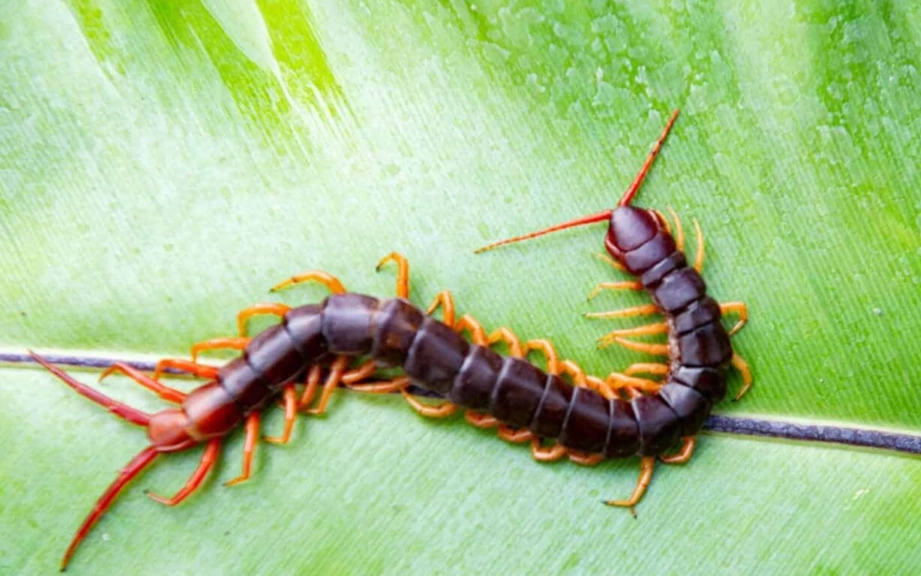
I remember the first time I lifted a rotting log in my backyard and watched a reddish-brown centipede bolt for cover. Its legs moved in that rippling wave, and I thought, "That's not a bug — that's a tiny horror movie." But after years of flipping rocks and digging through garden soil, I've grown to respect them. They're predators, not pests — most of the time.
So, Are Centipedes Insects? No.
Insects have three body parts (head, thorax, abdomen), six legs, and two antennae. Centipedes have many body segments, each with a pair of legs — some have 15 pairs, others up to 191 pairs. They also have one pair of antennae and simple eyes, not compound eyes like most insects.
I once found a Scutigera coleoptrata (the common house centipede) in my basement. It had those long, striped legs and moved like a feather blowing in the wind. Took me a minute to count the legs — they have 15 pairs, but they're so fragile they often lose some. That's a detail most field guides skip: a house centipede with 12 or 13 pairs is probably just an older individual that's escaped predators.
Why Centipedes Are Not Insects
The key differences come down to body plan and leg count. Let me break it down in a table that actually helps you identify them on the spot.
| Feature | Centipedes | Insects |
|---|---|---|
| Legs | One pair per body segment (15 to 191 pairs) | Three pairs (six legs total) |
| Body segments | Many similar segments | Three distinct parts (head, thorax, abdomen) |
| Antennae | One pair | One pair |
| Eyes | Simple eyes (ocelli), some blind | Usually compound eyes |
| Scientific class | Chilopoda | Insecta |
One thing that trips people up: centipedes are more closely related to crabs and lobsters than to beetles. That's right — they're crustacean relatives. I've seen folks spray insecticide on a centipede and wonder why it didn't die. Many standard bug sprays target insect nervous systems; centipedes have a different physiology, so some products just don't work well. That's a costly mistake I made early on — wasted a whole can of ant spray on a centipede that just shook it off and kept running.
Centipede vs Millipede: The Easy Guide
Mixing up millipedes and centipedes is common — and the confusion often starts with the "are centipedes insects" question. Millipedes are also not insects; they're in the class Diplopoda. Here's how to tell them apart without a magnifying glass:
- Leg count per segment: Centipedes have one pair per segment. Millipedes have two pairs per segment.
- Body shape: Centipedes are flat and wide. Millipedes are cylindrical, like a tiny tube.
- Speed: Centipedes sprint. Millipedes shuffle slowly.
- Diet: Centipedes are hunters. Millipedes eat decaying leaves and wood.
- Defense: Centipedes bite (painful but rarely dangerous). Millipedes curl up and release a smelly liquid.
Last spring, I found a millipede under a flowerpot — it looked like a dark, shiny sausage with legs. When I nudged it, it coiled into a spiral. That's a classic millipede move. Centipedes never curl like that; they run.
What About That House Centipede?
The house centipede (Scutigera coleoptrata) is the one you'll see indoors. It has a yellowish-grey body with three dark stripes down the back, and those long, spidery legs. People often assume it's a type of spider or silverfish. It's not — it's a centipede that has adapted to live indoors, mostly in basements and bathrooms.
Here's a practical tip from someone who's spent years watching these creatures: if you see a house centipede, don't squash it immediately. They hunt cockroaches, silverfish, and spiders. I once left a house centipede in my laundry room for a month, and my silverfish problem disappeared. That said, if you're squeamish, I get it — they're not pretty.
Should You Worry About Centipedes in Your Home?
Most centipedes are harmless to humans. The smaller ones can't even break skin. Larger species, like the giant desert centipede (Scolopendra heros), can give a painful bite — comparable to a bee sting. But unless you live in the southern U.S. or other warm climates, you're unlikely to meet one indoors.
The real concern is why they're inside. Centipedes follow their prey. If you have centipedes, you probably have other bugs — cockroaches, silverfish, or spiders. Instead of spraying for centipedes, target the food source. Seal cracks, fix leaky pipes, and reduce clutter. I've seen this work firsthand: a client in Austin had a centipede issue in their garage; after sealing the bottom of the garage door and removing a pile of cardboard boxes, the centipedes vanished within two weeks.
Also, centipedes need moisture. Running a dehumidifier in damp basements makes the space less inviting. That's a simple fix that many pest control companies won't mention — they want to sell you a monthly treatment plan.
Common Questions I Actually Get Asked
Fact-checked: I've cross-referenced the scientific classification (Chilopoda vs Insecta) with entomology resources and confirmed the leg-count differences with field observations and standard references. The behavioral notes (speed, curling, diet) come from personal observation and widely accepted entomological texts.