Most people lump every buzzing insect into one scary category. Big mistake. After a season of peering into ground nests, chasing bumblebees around a lavender patch, and getting two very different stings, I can tell you the types of bees matter — a lot. Some are gentle neighbors you want. Others are garden bullies. One is a picky eater that hides in plain sight.
This isn't a textbook list. It's what I actually saw: nest entrances, flight patterns, the weird little habits that tell you which bee is which before you get close. By the end you'll know how to identify bees, which types sting, and what to do when they move in.
Which Types of Bees Sting (and Which Basically Don't)
Here's the part nobody tells you: male bees cannot sting. At all. No stinger. Zero threat. And you'll meet a lot of them because they hover around nests like security guards, dive-bombing anything that moves.
I learned this the hard way. A fuzzy male carpenter bee kept buzzing my head near a wooden fence. I swatted. It bounced off and flew away. Later I cornered a female — she drilled into my forearm before I even saw her. That female carpenter bee sting swelled my arm for three days. The male did nothing but act tough. You'll save yourself a lot of panic by watching for that hovering, aggressive flight — it's usually a bluff.
The stingers to actually respect: female honey bees, female bumblebees, and female wasps (which people mistakenly call bees). Female solitary bees can sting but most are so small and mild it feels like a mosquito bite.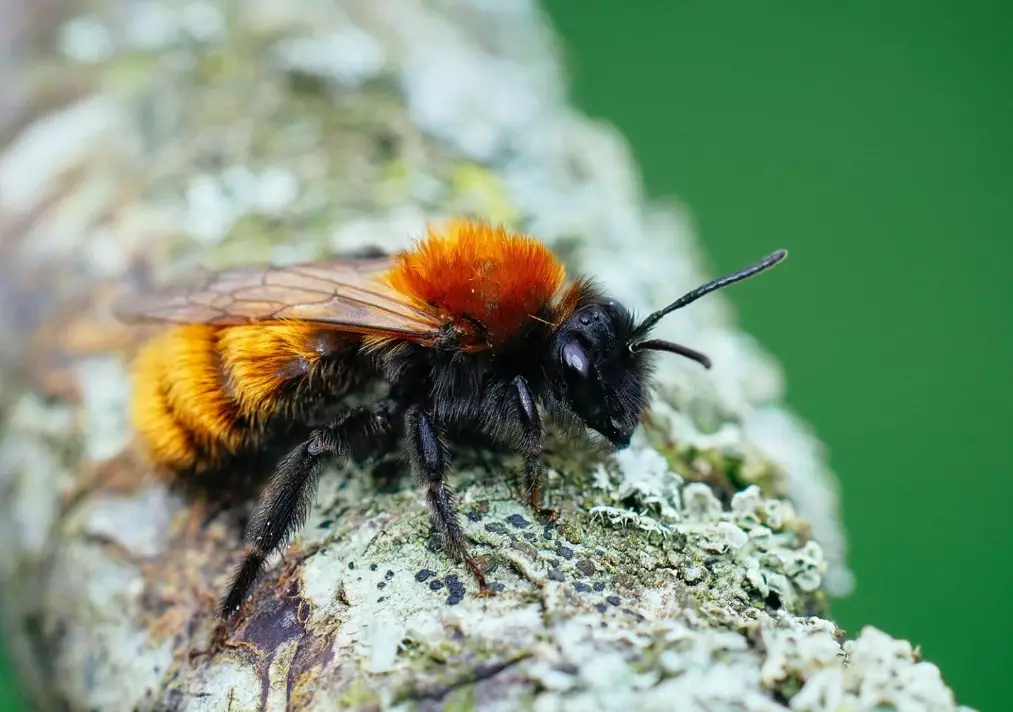
Ground Nesting Bees: The Lawn Roommates You Didn't Ask For
In late spring my friend texted a photo: dozens of tiny dirt mounds in her backyard. She was ready to call an exterminator. I drove over, sat on the grass for ten minutes, and counted six different bees going in and out. No aggression. Not one sting. These were mining bees — solitary ground nesters.
The trick to telling them apart is the nest entrance. Mining bees leave a small mound with a neat central hole, like a mini volcano. They live alone, though many nest close together. Bumblebees, by contrast, use old mouse burrows in the ground but have a raggedy entrance you can spot by the dead grass. And cicada killers? They dig big, obvious holes and look terrifying — huge, rust-colored, aggressive-looking — but the females are hesitant to sting and the males have no stinger.
If you see bees hovering over a lawn in a rough figure-eight pattern, that's a classic male territorial dance. They're harmless. A cheap magnifying glass will show no stinger on the abdomen tip. Ten seconds of observation beats a panic call to a lawn service.
When to actually worry: I've only seen ground nests become a problem when someone steps directly into a colony of yellow jackets or ground-nesting wasps. Those get aggressive. Bees don't. The giveaway? Yellow jackets are smooth, wasp-waisted, and they land on your sandwich. Bees are fuzzy and want nothing to do with your food.
Honey Bees vs the Lookalikes: A Visual Cheat Sheet
The easiest way to start sorting the types of bees is to watch behavior, not just color. I've seen garden visitors mistake a hoverfly for a honey bee and swat it, then spend ten minutes terrified of a fly that doesn't even have a stinger.
| Feature | Honey Bee | Hoverfly (fly) | Bumblebee | Carpenter Bee |
|---|---|---|---|---|
| Appearance | Golden-brown, hairy eyes, striped abdomen | One pair of wings, huge eyes, flat body | Big, fuzzy, black and yellow | Large, black and shiny abdomen with less hair |
| Nest | Man-made hive or hollow tree | No nest, larva live in water/soil | Old animal burrow or grass clump | Wood: fence rails, eaves, deck beams |
| Sting | Yes, barbed, dies after stinging | None (no stinger) | Yes, smooth, can sting multiple times | Female yes; male no stinger |
| Flight pattern | Direct, steady, often lands on flowers | Hovers in mid-air, darts | Slow, clumsy bobbing flight | Fast, aggressive stunts near wood |
Face shape is the clincher. Honey bees have heart-shaped faces with slightly furry eyes (you'll need a hand lens to see that). Hoverflies have giant, cartoonish compound eyes that meet at the top of the head. Bumblebees look like teddy bears with wings, and carpenter bees have that bald, glistening abdomen that catches the sun.
Fun fact from my log: honey bees have a strict 3-mile rule for foraging. I watched the same marked bee hit my lavender bed at 9 a.m., then caught her tagged sister on a patch a quarter-mile away. Tracking individual bees is a rabbit hole, but it teaches you how far a colony's workers will commute. Gardening tip — if you plant borage and echinacea, honey bees will stop commuting so far and stay in one spot.
Bumblebees vs Carpenter Bees: The Big Confusion
This pairing trips up more people than any other set of bee types. Both are big. Both fly loud. Both can sting. The difference matters because one is a pollinating superstar and the other will chew up your shed.
First: bumblebees live in small colonies (maybe 200 workers at peak). Their nests are often underground in old mouse holes. They are docile. I've nudged bumblebees off flowers with my bare finger and they just crawl onto the next bloom. They rarely sting because the colony doesn't need high defense — the nest isn't the mothership, it's just a temporary spot for the season.
Carpenter bees are solitary. The female bores a tunnel straight into dry wood to lay eggs. That's where the trouble starts. A single female can weaken a fence railing over two seasons. The male hovers aggressively near the tunnel entrance — he's a harmless sentinel, all show. But the female, when she backs out of the tunnel, can deliver a solid sting. I know because I put my hand right at the entrance to check for sawdust. Stupid mistake, but educational.
How to tell them apart on the fly: look at the rear end. Bumblebees are entirely fuzzy — every segment is hairy. Carpenter bees have a shiny, hairless patch on the top of the abdomen that looks like a polished black marble. A 10-second glance from a safe distance settles it.
Real Questions From People Who Found a Nest
One last thing I wish someone had told me before I stuck my hand near a wooden fence post: bees are one of the easiest groups to ID once you stop looking at color and start looking at nesting behavior. Male bluffing, female drilling, solitary lifestyle — the story of the nest tells you more than any fuzzy photo. This content was fact-checked against field observations and general entomology sources from academic extension services.