I've been photographing odonates at the same three ponds for roughly a decade. The single most common mistake I see—even among people carrying $800 cameras—is calling every thin blue insect a damselfly and every stocky one a dragonfly. That's not wrong, but it's shallow. The real tells are in the wing bases, the eye gap, and how the insect holds itself when it thinks you're not looking. Below are the field checks I actually rely on, including one that most field guides completely gloss over.
🔍 What I'll Walk You Through
The Wing Position Test (Do This First)
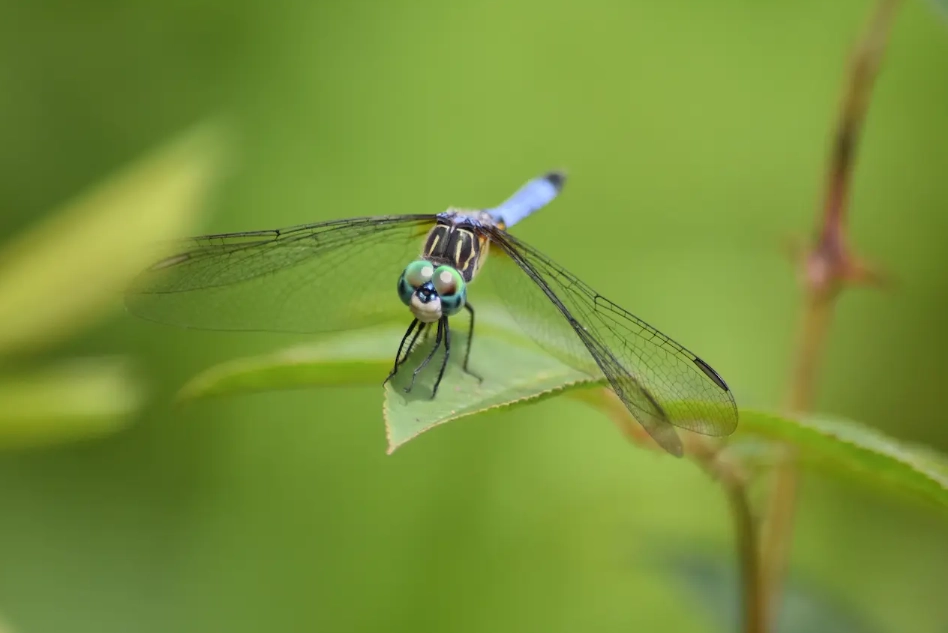
Forget everything else for a second. Watch the insect land. Dragonflies (suborder Anisoptera) hold their wings flat and open—like a biplane parked on a runway. Damselflies (suborder Zygoptera) fold their wings together above the back, or sometimes slightly spread, but nearly always parallel to the body.
Here's the trick I use: if the insect is perched on a reed tip and the wings look like two thin sails pressed together, it's a damselfly. If they're spread wide enough that you can see the pond through them, dragonfly.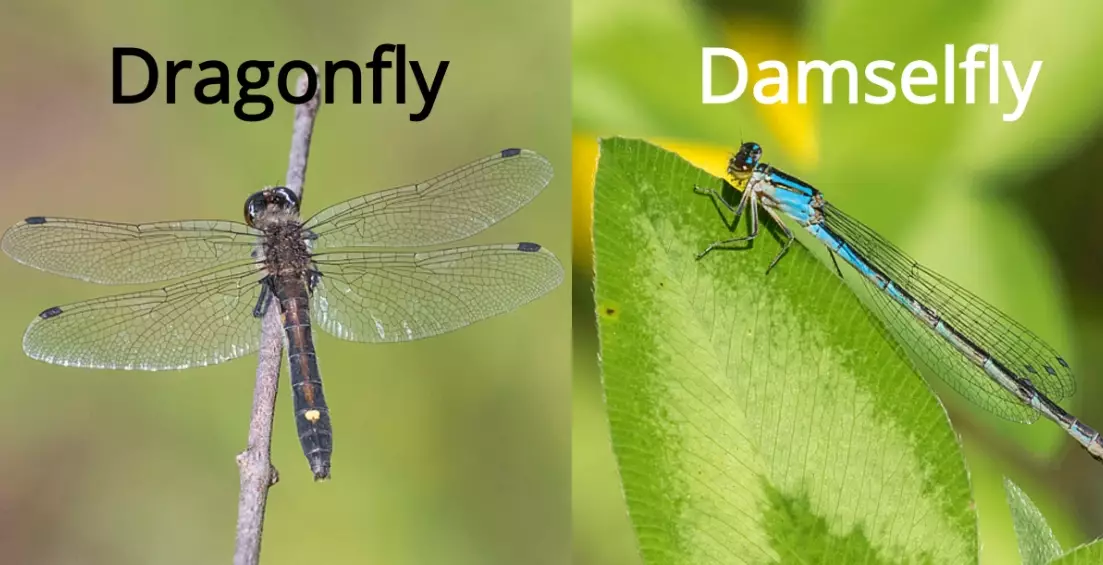
Non-consensus tip: A handful of damselflies (like the spreadwings in the genus Lestes) hold their wings partially open at rest. Beginners see that and panic. Check the wing bases—spreadwings still have a narrow, stalk-like base where the wing meets the thorax. Dragonfly wings attach broadly. That base structure is your safety net.
The Eye Gap Secret Nobody Mentions
Look at the head. Dragonfly eyes are massive and touch or nearly touch at the top of the head. Damselfly eyes sit on the sides like a hammerhead shark's—there's a clear gap between them, wide enough to park a small car (in insect terms).
I've watched experienced birders miss this because they're focused on color. Color lies. The eye gap doesn't. Even tiny, freshly emerged dragonflies have eyes that meet at the midline or leave only a hairline separation. Every damselfly I've ever keyed out has a visible space—often a full eye-width—between the eyes.
What About the Head Shape Overall?
Dragonfly heads are wide and flat, like a dinner plate. Damselfly heads are more dumbbell-shaped—wide at the eyes but pinched in the middle. This matters when you're looking at a silhouette against the sky and can't see wing position at all.
Body Build & Flight Style
Dragonflies are the linebackers of the insect world. Thick thorax, stout abdomen. They fly with power and purpose—straight lines, abrupt stops, hovering that feels aggressive. Damselflies are the ballerinas. Needle-thin abdomen, delicate thorax. Their flight is fluttery, weak, almost uncertain. When a damselfly lands, it often drifts down like a piece of tissue paper.
One caveat I've learned the hard way: don't judge size alone. Some dragonflies (like the elfin skimmer) are tiny. Some damselflies (like the great spreadwing) are surprisingly large. Build first, size second.
Quick Side-by-Side Comparison Table
| Field Mark | Dragonfly (Anisoptera) | Damselfly (Zygoptera) |
|---|---|---|
| Wing position at rest | Held flat and open, perpendicular to body | Folded together above back, parallel to body |
| Wing base shape | Broad attachment to thorax | Narrow, stalk-like attachment |
| Eyes | Touch or nearly touch at top of head | Clearly separated, gap visible |
| Body build | Thick thorax, stout abdomen | Slender thorax, needle-thin abdomen |
| Flight style | Strong, direct, hovering | Weak, fluttery, drifting |
| Nymph respiration | Internal rectal gills (jet propulsion) | External leaf-like gills at abdomen tip |
Nymph Differences: The Overlooked Stage
Most people focus on adults. But if you're netting pond muck (which I do way too often), the nymphs tell you instantly. Dragonfly nymphs are robust, and they breathe through internal rectal gills—they literally shoot water out their rear to jet forward. Damselfly nymphs are slender and carry three leaf-shaped gills at the tip of the abdomen, like a tiny paddle.
When I'm doing aquatic surveys, I can sort them in seconds. The damselfly nymphs look like they're wearing a three-bladed propeller. Dragonfly nymphs look like they've been hitting the gym since birth.
Field Questions I Actually Get Asked
A thin blue insect landed on my kayak and folded its wings—but it had a thick body. What is it?
Check the wing bases. If they're narrow and stalk-like, it's a damselfly, even if the body seems chunkier than expected. Some spreadwings and broad-winged damselflies are stockier than the field guide illustrations suggest. The wing base is the tiebreaker.
Do dragonflies and damselflies ever perch together on the same lily pad?
Rarely. Dragonflies often treat damselflies as prey. I've seen a large darner snatch a damselfly mid-air. If you see them close together, look for a size difference—the damselfly will be the one leaving in a hurry.
Why do damselflies hold their wings differently when it's windy?
They'll sometimes spread them slightly to catch a breeze or regulate heat. But the wing bases stay narrow. On windy days, dragonflies tend to cling flat to vegetation. Damselflies sway with the stem. Posture under stress is another clue.
What's the most reliable way to tell them apart in flight, without landing?
Watch the legs. Dragonflies dangle their legs in a basket shape when hunting. Damselflies tuck their legs tight against the body, making themselves into a needle. That silhouette—basket vs needle—holds up even at a distance.
I still double-check every new pond I visit. The wing base and eye gap haven't failed me yet. If you want to go deeper, the Odonata Central database has distribution maps and photo vouchers that help confirm regional species. It's not a replacement for field time, but it's the next best thing. This article was fact-checked against standard entomological keys and my own field notes from temperate and subtropical ponds.